

Rebuilding a Life in a Country Called Estonia

Updated: Jun 6
"Estonia is now our second Motherland," says Tahsin Kayurga, who arrived in Estonia with his wife more than four years ago as political refugees.
An engineer who once ensured that buildings in Turkey met strict earthquake standards has now rebuilt his life as a math teacher in Estonia.

I'm sitting down with Tahsin for a second time. After listening to the recording of our first interview, I felt there was something more he wanted to say.
This time, we didn't speak only about learning Estonian or becoming a math teacher. Tahsin opened up about building friendships, getting through difficult times, and what it means to arrive in a new country as a refugee.
A Refugee is Not a Digital Nomad
"Going abroad can happen in two ways," explains Tahsin.
The first is when a person chooses it voluntarily - to build a career, learn something new, or simply experience life in another country. It's a conscious decision, and mentally you're more prepared for it. You have more control over your life and carry far less emotional burden.
"But the second situation is our situation," he says quietly.

It’s when a person is forced to leave - when they have no choice but to escape their homeland. Then everything becomes more complicated. "I think going to another country as a refugee is one of the hardest things,” he adds.
You leave behind your family, all your friends, and your home. The hardest part is not knowing when you’ll be able to return, when you’ll see them again, or whether you’ll ever see them at all. That uncertainty and constant longing never fully disappear.
Tahsin recalls how his wife's mother became ill with cancer and later passed away. They couldn't even go back to see her. "It was very difficult for my wife, she starts crying whenever she remembers it."
What's Behind the Silence
When Tahsin and his wife arrived in Estonia, they first stayed at the Vao Refugee Centre. Listening to him describe daily life there, I found myself wondering how much emotional strength refugees have left to pull themselves out of such a situation.
Tahsin says the biggest challenge is not sharing a common language.
The second is money.

"If someone has a family and children, their thoughts are always with them, or with money. They're not interested in other things, like talking to others. That’s why many of them stay silent all the time," explains Tahsin.
He believes that the first step toward becoming independent is learning the language.
"Everyone has to find their own motivation. For us, it was the wish to stand on our own feet again. Estonia gave us freedom, so we felt we had to give something back."
Finding Motivation in Difficult Times
Tahsin says his wife Zeynep played a major role in helping him through difficult times.
"She is very cheerful and social. I also talk to people, but I tend to keep a lot inside and not share how I feel. That’s why I was under a lot of stress for a long time - especially when I was unemployed. I don’t like waiting and I wanted to learn Estonian immediately, but it takes time."
They agreed that whatever happens, they'll talk about it.
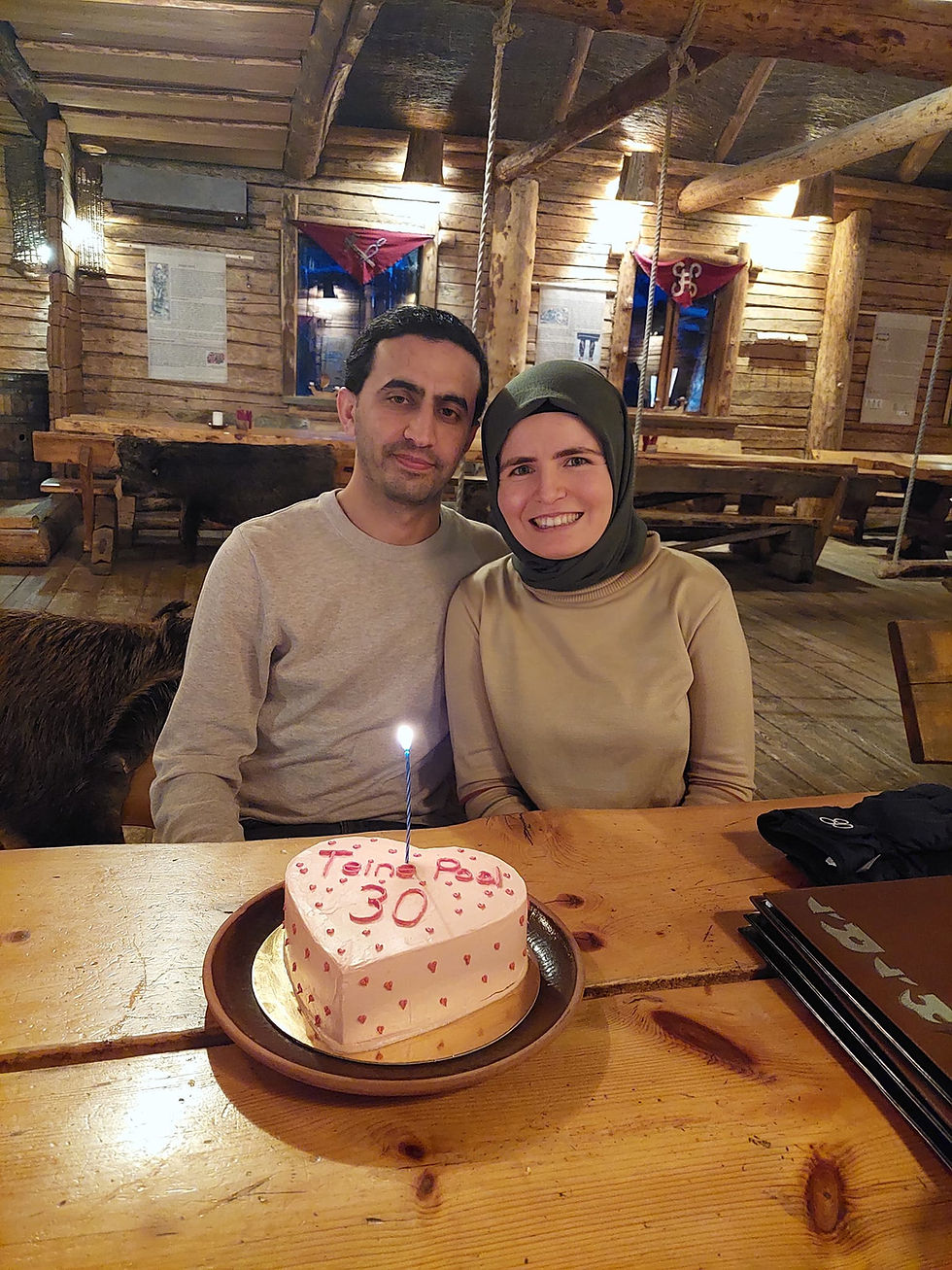
"With my wife, we looked at everything from the perspective of what can we do together — not alone, but together. When there are two people, there are two hearts," says Tahsin poetically.
Instead of worrying too much about the future, they focused on small daily steps.
“If I studied Estonian for four or five hours today, then why should I worry? One day I will find a job. And if I give my best and something still doesn’t happen, then maybe God has another plan for us.”
Friendships in Turkey vs Estonia
Besides supporting each other, Tahsin also found strength in building new friendships. But as many adults know, making friends is not easy, especially in a new country.
I was curious how he found his way into Estonians' hearts ♥️.
Tahsin explains that in Turkey, friendships comes naturally. People are socially active, call each other often, drink Turkish coffee together, and genuinely take interest in one another.
"We invite people over, we keep in touch, and we don’t expect anything in return."
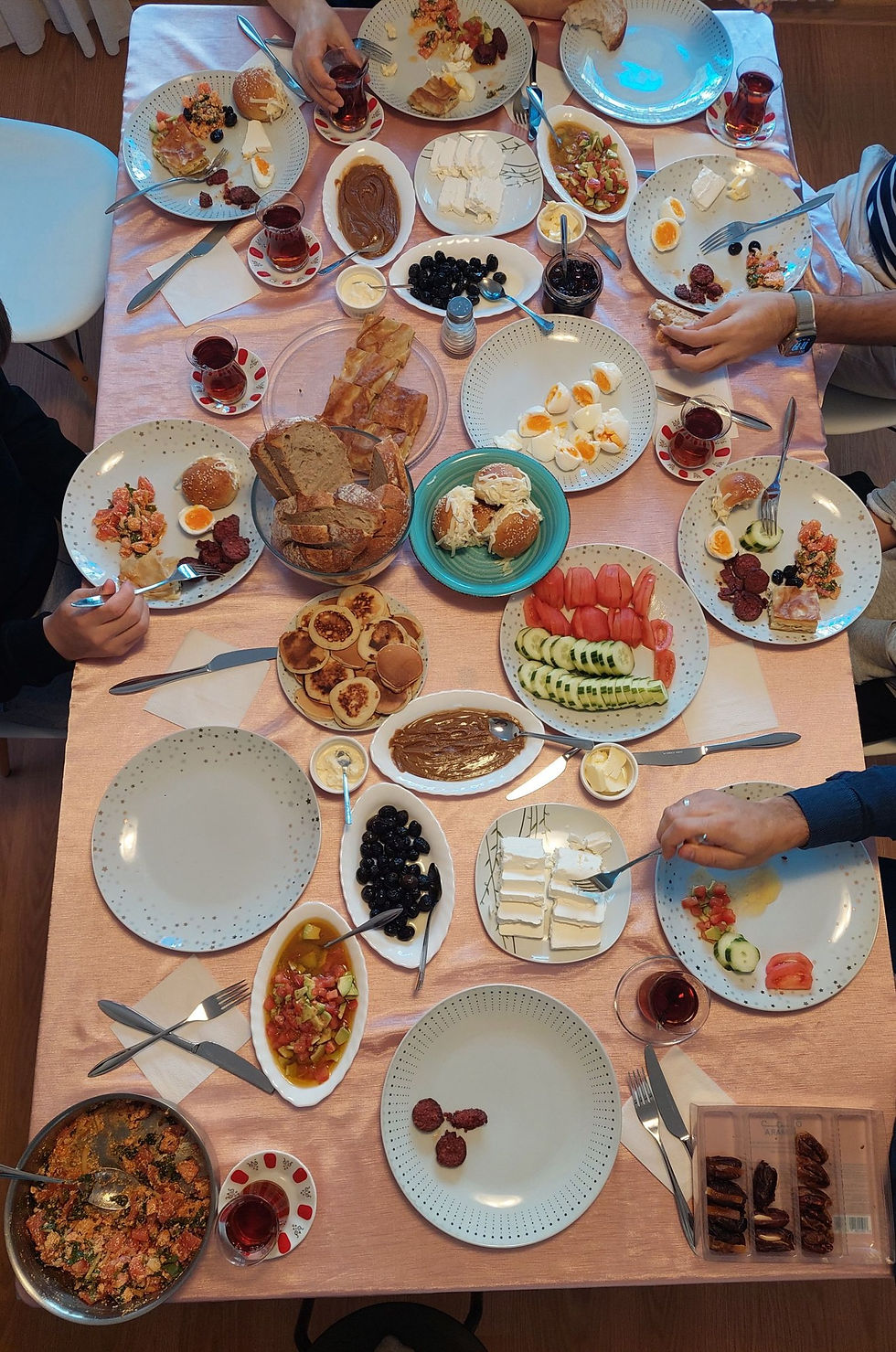
As if there could not have been a better moment, suddenly the doorbell rings. Tahsin excuses himself and I hear a cheerful voice from the background. It turns out his neighbour has just brought over some cake.
Tahsin believes building connections between different cultures is essential. "If we don’t know each other, there will always be barriers. That’s why it’s so important to communicate and ask questions.”
"From far away, Estonians may seem very cold,” says Tahsin. “But actually, people here are kind. It just takes more time to become friends. Maybe because Estonia’s history has some difficult chapters. But Estonia has become our home. We no longer feel like strangers here."
How to Make New Friends in Estonia
When I ask Tahsin where people can make new friends, he immediately has an answer.
“Look, a friend sent me the Strava app yesterday, and I joined a running group in Nõmme. New friendships can happen like that.”
If you go somewhere regularly, you start building connections. You don’t always need to go with the intention of finding friends. You can also just have a nice conversation.
For Tahsin, the key is to take initiative and learn the language. He also sees learning Estonian as a question of respect.
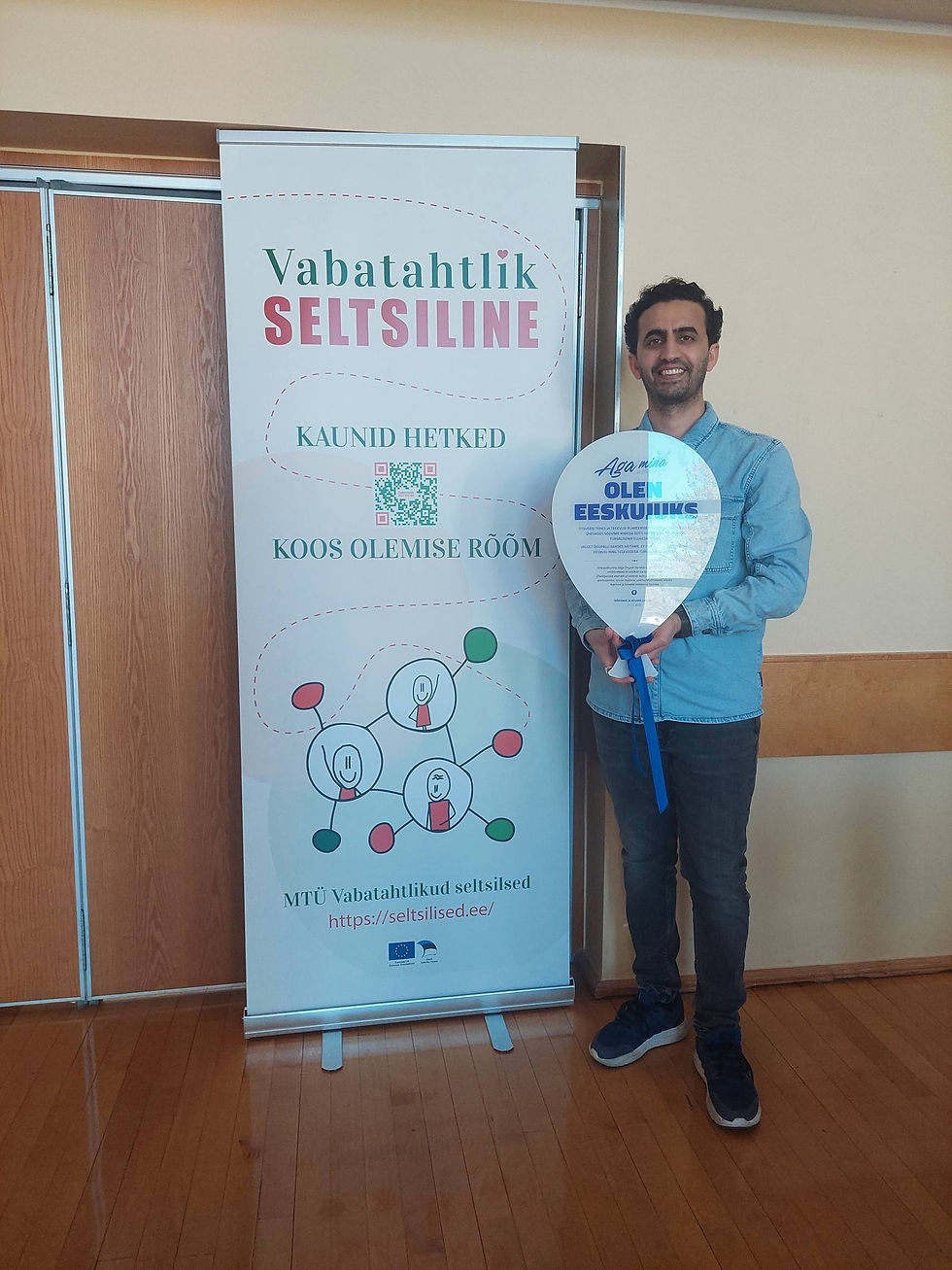
"My wife and I volunteer with friends through our NGO Saame Tuttavaks. We visit libraries, organise cooking courses, invite Estonians, and build connections. We also support elderly people who live alone. We’ve made many Estonian friends along the way."
“When we lived in Turkey, we were not this active in society. But in Estonia, that changed. Estonia has really changed our lives in a positive way.”
Starting a New Career in Estonia
After getting his residence permit, Tahsin believed that speaking English would be enough to quickly find work and continue his engineer career.
“I applied to many companies. Only one invited me to an interview, and the answer was negative,” he says.
Then a friend (a foreign math teacher whose story I’ve also shared on my blog) suggested a different path.
“As an engineer I was able to apply to Tallinn University for a master's in mathematics. I just needed to complete 4 missing credits with an additional course. After a mathematics exam and interview, I was accepted."

From there on he had a job interview in Tallinna Avatud Kool.
"My Estonian was B1 level, but they were very pleased with how well I spoke, even though it was my first year here. They gave me a chance and supported me. The beginning was not easy and standing in front of a classroom required courage. The first year was the toughest."
Tahsin started watching a lot of videos on how to teach mathematics and learned the necessary terminology. He kept reading books in Estonian to expand vocabulary.
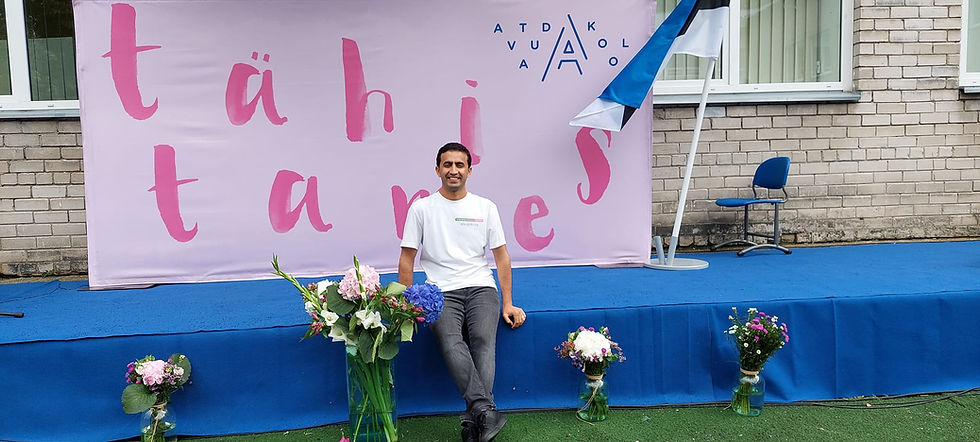
“I told my students directly that Estonian is not my mother tongue and asked them to correct me if possible. When they saw how hard I was trying, they respected that.”
Final Thoughts
"Estonia is now our second Motherland and maybe we'll stay here until the rest of our lives," says Tahsin at the end of our interview.
As an Estonian, the word "Motherland" immediately catches my attention. Our national anthem begins with the words: “Mu isamaa, mu õnn ja rõõm” - “My Fatherland, My Happiness and Joy.”
Therefore, I had never really thought that in other cultures, the same "idea" is connected to a mother.
But I think it's beautiful.
Our interview was originally in Estonian 🇪🇪 and I was very impressed by Tahsin's fluency, especially when hearing expressions like "leiba teenima" (to earn a living) naturally appearing in his vocabulary.
But even more than that, I was inspired by his enthusiasm to actively participate in Estonian society and by the way he sees it not only as a "hobby", but also as a responsibility.


Comments